
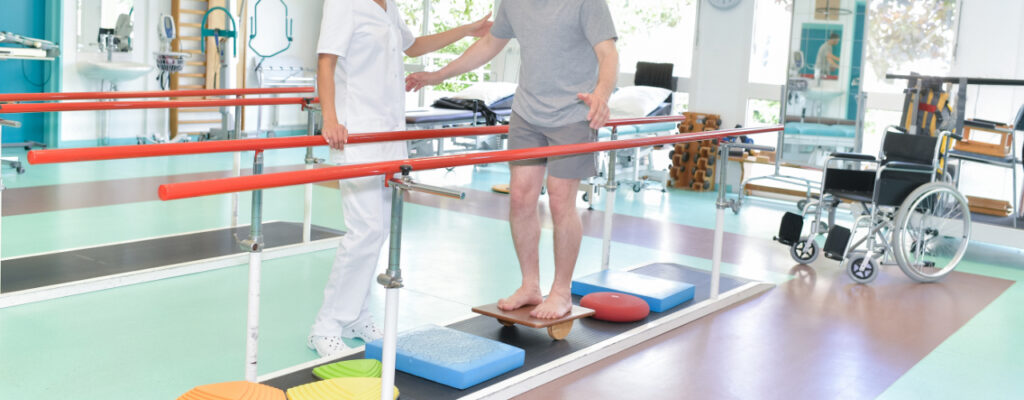
Fall Prevention Physical Therapy
Improve Balance & Reduce Fall Risk
Staying steady on your feet is essential for living confidently and independently—at any age. At HealthQuest Physical Therapy, our Fall Prevention & Balance Training programs are designed to reduce your risk of falls, improve stability, and rebuild the strength and coordination needed for everyday movement. Whether you’ve noticed changes in your balance, experienced a recent fall, or simply want to feel more secure and active, our expert therapists use proven, individualized strategies to help you move with confidence and protect your long-term health. Falls are the leading cause of injury-related deaths among 45 years and older…don’t be one of them! We can help.
40+ CONVENIENT LOCATIONS
POTENTIAL GOALS & STRATEGIES
for treating balance & walking disorders

Improve stability & Prevent falls

improved
mobility & flexibility

increased
strength & endurance

education & preventative tools

return to
normal function

proper
alignment
Start Your
journey to health Today
COMMON CONDITIONS
for Fall Prevention & Balance Training
- How you walk – your pace, rhythm and style – are also known as your gait. After a foot or leg injury, or after a neurological problem such as a stroke, you may find yourself with a need to improve your walking skills. Gait training can improve your leg or foot movement to increase your stability. Common in runners, athletes, older adults, and those who have had an injury, gait training can help you move faster, with better posture and without pain.
- Balance and gait disorders are often lumped together because the two are related. If something is “off” with your balance, your gait is likely affected. Balance and walking disorders both fall under the category of functional disorders since they can interfere with your positional awareness, your ability to keep yourself upright, and your overall normal movement functions.
- Musculoskeletal problems contribute to balance and gait dysfunction because a certain level of mobility and strength are required to produce functional movements. Limitations in range of motion, flexibility, strength, and/or endurance, whether orthopedic or neurological in origin, can contribute to the deficits.
- Aging is a leading cause of balance and gait dysfunctions. As one ages, strength and flexibility decrease causing impairments to balance and an increased risk of falls.
TREATMENT PLAN
for Fall Prevention & Balance Training
We treat the individual…not just the pain or dysfunction. Your physical therapy treatment may include:
Personalized Care Plan
Balance
exercises
strength
training
Gait
Training
Vestibular
rehabilitation
environmental
modifications
learn more about
balance & walking disorders
When you arrive at one of our Southeast Michigan physical therapy offices, you will undergo an initial evaluation to examine your balance, gait, stance, symptoms, and medical history. Your therapist might watch you walk back and forth a few times to observe your gait. Your gait might be timed because the speed at which a person takes a step is often related to falling. You might also go through some balance tests to analyze your risk of falling. A series of strength and range-of-motion measurements will be done to determine if there is a physical component to any gait or balance problems, such as musculoskeletal limitations. Reflex and sensation screenings will also be done because balance and gait disorders frequently have a neurological component. Once this is complete, your physical therapist will design an individualized treatment plan based on your specific needs, in order to treat your balance or gait disorder.